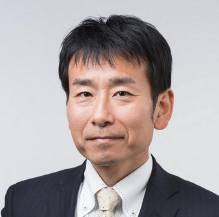
Prof. Yoshitaka Umeno
[Chairperson]
The University of Tokyo
Sep, 15-18, 2026
The University of Tokyo
Komaba, JAPAN

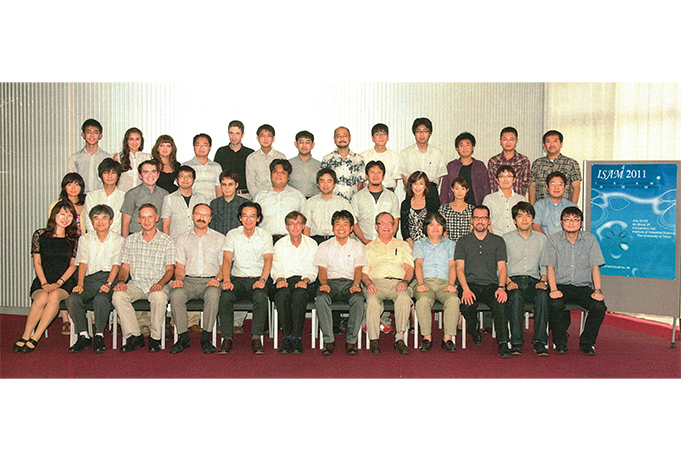
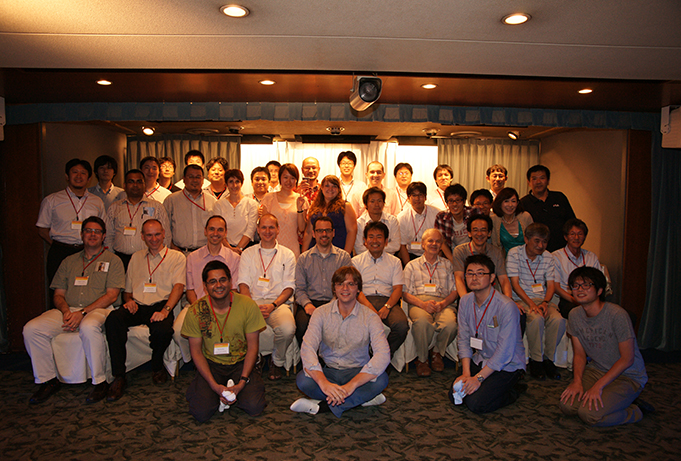
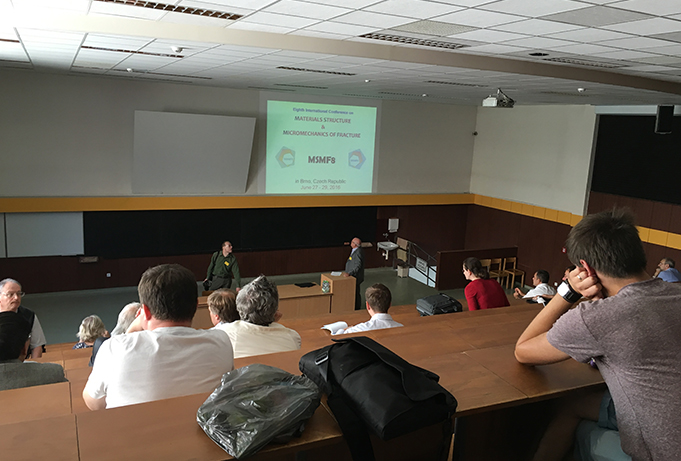
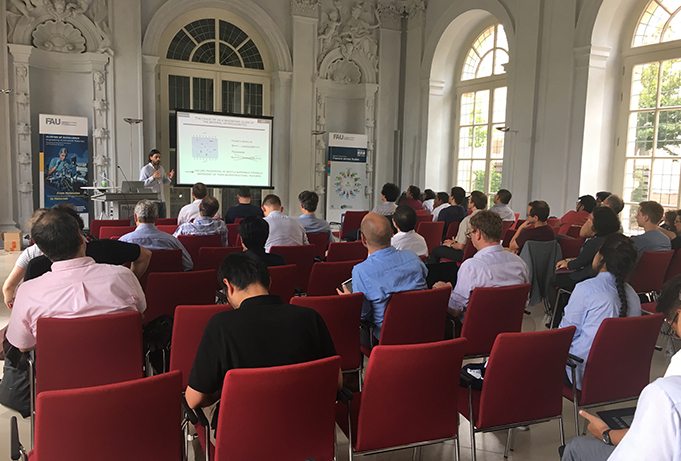
Following the success of former meetings (2011 and 2013 in Tokyo, 2016 in Brno, and 2019 in Erlangen), the 5th ISAM meeting will be held in Tokyo in the period of September 15-18, 2026. This symposium will provide an opportunity for active researchers to present and discuss recent findings and developments in and around the field of atomistic and multiscale modeling and simulation for revealing mechanics and multiphysics of materials. ISAM5-2026 is designated as IIS UTokyo Symposium No. 132 and will be hosted at the Institute of Industrial Science (IIS, a.k.a. SEIKEN), The University of Tokyo, Japan.
[Chairperson]
The University of Tokyo

The University of Tokyo
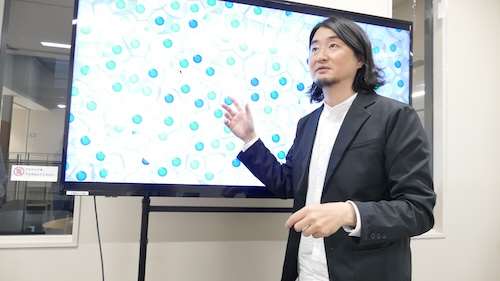
Toyota Institute of Technology
2026.08.16 Ordinary Registration was closed as scheduled on August 16, 2026.
2026.07.03 Ordinary Registration is officially open as scheduled.
2026.07.01 Early Bird Registration was closed as scheduled on July 01, 2026, 15:59 JST. Ordinary Registration will open on July 3, 2026, 10:00 JST.
2026.06.19 The One-page abstract submission form was closed as scheduled on June 19, 2026. Thank you very much for your contribution!
2026.06.05 The deadline of One-page abstract submission is extended to June 19, 2026.
2025.11.27 Early-bird registration is officially open.
The receipt for the registration fees and the Certificate of Attendance will be available for download from My Page the day after the symposium conclusion.
2025.11.20 The abstract submission system is officially open.
2025.10.27 Website released.
Research topics of this symposium include but not limited to:
[T1] Ab initio and data-driven simulation of materials properties
[T2] Atomistic and multiscale modeling simulation of materials plasticity, fracture, fatigue
and tribology
[T3] Simulation methods for multi-physics of materials: interplay between multiple
properties
[T4] Modeling and simulation of biomaterials and polymers

Max Planck Institute for Sustainable Materials, Germany
Mechanical behavior at the nanoscale is governed by surfaces, internal interfaces, crystallographic orientation, shape, and topology. For characteristic dimensions below 100 nm, surface stresses, elastic anisotropy, and nonlinear effects influence not only the elastic response but also dislocation nucleation and dislocation–defect interactions. Atomistic simulations provide access to these mechanisms at full resolution; however, their predictive capability depends critically on how accurately topology, interfaces, and energetics are represented.
Using nanoporous gold as a model system, we demonstrate how experimentally informed atomistic models derived from 3D electron tomography enable direct comparison with in situ mechanical testing. Realistic ligament sizes and network topology are essential to reproduce deformation gradients, plastic localization, and the resulting microstructural evolution. Simplified or scaled-down geometries cannot capture the observed mechanisms.
A characteristic feature of deforming nanoporous structures is that the ligaments are predominantly subjected to bending. We therefore performed bending simulations on single-crystalline and twinned nanowires. Incompatibility stresses at internal interfaces are shown to modify the bending response, an effect typically neglected in elastic studies of nanostructures. Twin boundaries further influence both the yield stress and the operative deformation mechanisms.
The elastic response of nanowires is well known to depend on size and surface properties, yet different materials and interatomic potentials exhibit markedly different trends. We therefore conducted a systematic benchmarking study of interatomic potentials against first-principles reference data, revealing substantial variations in predicted surface stresses, stacking-fault energies, and nonlinear elastic constants. These quantities directly govern nanoscale deformation.

Faculty of Mechanical Engineering, Brno University of Technology, Czech Republic
The NiTi shape memory alloy has become the most widely used shape memory material in industrial, high-tech, and medical applications because of its unique properties, represented by the shape memory effect and superelasticity. Although it has only a single active slip system, NiTi martensite with the B19' structure exhibits remarkable plasticity. The underlying mechanism behind this behavior has remained unclear for a long time. Recently, a novel deformation mechanism termed "kwinking" was identified. Kwinking exhibits characteristics of both twinning and kinking: it forms twin-related regions while simultaneously accommodating plastic deformation through geometrically necessary dislocation walls. To understand the martensitic phase at the atomic scale, we employed machine learning approaches to develop a set of novel, very accurate interatomic potentials, which were benchmarked with the help of ab initio methods.
The machine-learned (ML) potentials were constructed from the ab initio training set obtained by fitting free energies and forces acting on individual atoms. All data necessary for the construction of the training set were obtained using the ab initio software package VASP. For the fitting of the ML potential, we employ i) the VASP routine that collects the selected configurations occurring during ab initio MD simulations and includes them in the data set, ii) the neural network approach implemented in the code RuNNer and iii) the atomic cluster expansion as employed in the code Pacemaker.

Pprime Institute - University of Poitiers, France
The understanding and characterization of mechanical properties in bulk materials have enabled the design of increasingly robust and lightweight structures. However, as experimental techniques now allow the manipulation and investigation of objects at the nanoscale, physical properties—such as electronic, catalytic, and mechanical behaviors—are found to deviate dramatically from their bulk counterparts. This phenomenon is primarily attributed to the increased surface-to-volume ratio, where surface effects become dominant over bulk properties.
In this talk, we explore how brittle materials like silicon can exhibit ductile behavior at very small scales, while ductile materials such as gold can become brittle when structured as nanoporous architectures. To elucidate the atomistic mechanisms governing these transitions, we performed numerical simulations using classical molecular dynamics and ab initio calculations.
Our findings reveal that in silicon, dislocation-mediated plasticity can be suppressed and replaced by diffusive plasticity or crack nucleation, depending on the object size and stress conditions. These observations will be discussed in the context of dislocation nucleation, propagation, and trapping mechanisms. Conversely, in nanoporous gold, we demonstrate how nanostructuring can induce a transition from ductile to brittle behavior.
This work sheds light on the fundamental mechanisms driving mechanical property transitions at the nanoscale and offers new avenues for designing materials with tailored mechanical responses.

ICAMS, Ruhr University Bochum, Germany
The emergence of foundational machine learning interatomic potentials (MLIPs) has catalyzed a paradigm shift in atomistic materials simulation, offering a scalable bridge between first-principles accuracy and large-scale molecular dynamics. Unlike models specific to a particular task or chemistry, these universal potentials achieve generalization across diverse chemical spaces and out-of-distribution robustness in various simulated conditions.
This presentation focuses on the Graph Atomic Cluster Expansion (GRACE), a framework that provides the theoretical foundation for next-generation foundational MLIPs. Universal GRACE models utilize E(3)-equivariant message-passing and high-body-order polynomials to create an exceptionally expressive yet computationally efficient description of the potential energy surface. By leveraging a mathematically rigorous basis, GRACE avoids the common trade-offs between model expressivity and inference latency, enabling nanosecond-scale simulations of complex phenomena.
We will examine GRACE's capacity to extrapolate beyond training data, with a focus on its performance for various classes of materials including covalent elements, metals and alloys, oxides, and molecular systems. We will also address a systematic generation of multi-fidelity datasets and the architectural integration of long-range electrostatics and magnetism.

Linköping University, Sweden
From nanoscale devices – such as sensors, electronics, and biocompatible coatings – to macroscale structural, automotive, and aerospace components, understanding plasticity and fracture is essential for achieving safe and durable material performance. This challenge is particularly severe in brittle ceramics, where atomic-scale processes govern macroscopic failure.
A mechanistic understanding of how atomic-scale plasticity influences macroscale properties remains largely lacking. Progress is hindered by (i) the practical infeasibility of direct in situ experimental characterization, (ii) the poorly understood interplay between plastic deformation and extended structural flaws, which ultimately control ceramic fracture resistance, and (iii) the prohibitive computational cost of ab initio simulations across relevant length scales. Atomistic simulations based on efficient and reliable machine-learning interatomic potentials (MLIPs) offer a promising pathway to overcome these challenges.
In the first part of this talk, I will present recent advances in ab initio molecular dynamics (AIMD) simulations of ceramic single crystals subjected to uniform shear and tensile loading up to slip or fracture. These simulations enable a qualitative classification of ceramics according to their propensity for brittle versus ductile failure and reveal systematic trends in theoretical strength and intrinsic toughness as a function of composition. Despite the limited system sizes accessible to AIMD, the predicted trends correlate well with experimentally measured fracture resistance. Moreover, AIMD provides insight into the electronic origins of plasticity and fracture, enabling the formulation of electronic-structure-based design for tougher ceramic alloys.
The second part of the talk focuses on MLIPs trained on AIMD data. I will demonstrate how these potentials enable large-scale (~106 atoms) stress-intensity (K)-controlled simulations of intergranular and transgranular fracture, from which macroscopic fracture toughness and strength can be quantitatively extracted. Using Ti1-xAlxN as a model system, I will show how aluminum concentration can be used to tailor polymorphic-transformation-mediated plasticity under K-controlled loading, highlighting strategies for ceramic toughening.
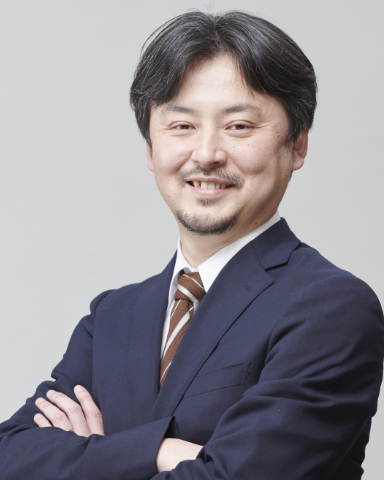
Tokyo University of Science, Japan
4H-SiC is used as a material for power semiconductors. Bipolar degradation, a performance deterioration of 4H-SiC during power semiconductor operation, is known to occur due to the extension of stacking faults within basal plane dislocations (BPDs). Proton irradiation is employed to suppress the extension of the stacking faults. The mechanism considered up till now is that proton irradiation creates point defects in the material, and the point defects inhibit the motion of partial dislocations within the BPDs, thereby suppressing stacking fault extension. To achieve more quantitative control over stacking fault extension, a quantitative understanding of how point defects inhibit partial dislocation motion is necessary.
To quantitatively understand the interaction between point defects and dislocations in 4H-SiC, this study models the elastic field generated by point defects and enables simulation of their interaction with dislocations using the parametric dislocation dynamics (DD) method. The elastic field generated by point defects was modeled using elastic dipoles. The elastic dipole was calculated using the residual stress method, which involves calculating the virial stress obtained from atomistic calculations of the relaxed crystal containing the point defect. In approximating the elastic field using the elastic dipole, the stress at the point defect location exhibits singularity. Therefore, we propose a method to calculate a non-singular elastic field by applying Cai et al.'s method (JMPS, 2006), which is originally proposed for obtaining the nonsingular expression for the stress of dislocations. The stress distribution calculated by this method was implemented in the DD method. By adding the stress generated by the point defect to the stress used in calculating the force acting on the dislocation (Peach-Koehler force), it became possible to calculate the elastic interaction. Using this method, the critical resolved shear stress, which is the shear stress required for a dislocation to move past a point defect, is calculated to investigate the effect of point defects on dislocation motion.
June 19, 2026: One-page abstract deadline
June 30, 2026: Early bird registration deadline
August 16, 2026: Ordinary Registration deadline
It is required to complete the payment of participation fee no later than the deadline
for your contribution to be included in the symposium program.
Convention Hall, Institute of Industrial Science (IIS),
The University of Tokyo
4-6-1 Komaba, Meguro-ku, Tokyo 153-8505, Japan
The venue is two stations away from Shibuya, one of the most active areas in Tokyo.
The most convenient way is to get the Keio-Inokashira Line to Komaba-Todaimae Station
(NB: please take the "local" train because express trains do not stop).
References: https://www.iis.u-tokyo.ac.jp/en/access/
The Best Presentation Awards will be presented to the top five student presenters receiving the highest number of votes from all participants.
Types of Presentation
1) Oral Presentation
- Each presentation is allocated 20 minutes (15 minutes for the talk and 5 minutes for Q&A).
- The presentation must be delivered in English.
- Please adhere strictly to your allocated time.
- Arrive at least 10 minutes before your session begins to check and resolve any potential technical
issues.
2) Poster Presentation
- Posters must be prepared in A0 size.
- Posters must be written in English.
Abstract Instruction
- Please follow the provided one-page abstract template for your submission.
- Please convert the abstract to PDF and submit both the PDF and DOCX files.
Abstract Template -
Word
▸
The One-page abstract submission form was closed as scheduled on June 19, 2026.
Thank you very much for your contribution!
| Early Bird (Before June 30, 2026) |
Ordinary Registration (July 3, 2026 - August 16, 2026) |
|
| Full Delegate | 50,000 JPY | 60,000 JPY |
| Student* | 30,000 JPY | 40,000 JPY |
| Banquet | 10,000 JPY | 10,000 JPY |
| Banquet for accompanying person | 10,000 JPY | 10,000 JPY |
Full delegate and student registration fees include the symposium program, coffee and refreshment, but NOT
banquet.
*Student refers exclusively to undergraduate and graduate students, and does not include post-doctoral
researchers.
Ordinary Registration was closed as scheduled on August 16, 2026.
Day 1: September 15, 2026: Registration / Welcome toast
Day 2: September 16, 2026: Opening / Oral session
Day 3: September 17, 2026: Oral session / Poster session / Banquet
Day 4: September 18, 2026: Oral session / Closing
| Day 1 (Sep 15) | Day 2 (Sep 16) | Day 3 (Sep 17) | Day 4 (Sep 18) | |
| 8:00 - 8:30 | Registration | |||
| 8:30 - 9:00 | Parallel Sessions 5 | |||
| 9:00 - 9:30 | Opening Ceremony | Keynote Speaker | ||
| 9:30 - 10:00 | Keynote Speaker | |||
| 10:00 - 10:30 | Break | Break | ||
| 10:30 - 11:00 | Break | Parallel Sessions 3 | Parallel Sessions 6 | |
| 11:00 - 11:30 | Keynote Speaker | |||
| 11:30 - 12:00 | ||||
| 12:00 - 12:30 | Lunch | Lunch | Lunch | |
| 12:30 - 13:00 | ||||
| 13:00 - 13:30 | ||||
| 13:30 - 14:00 | Parallel Sessions 1 | Parallel Sessions 4 | Parallel Sessions 7 | |
| 14:00 - 14:30 | ||||
| 14:30 - 15:00 | ||||
| 15:00 - 15:30 | Registration | Break | Break | Break |
| 15:30 - 16:00 | Parallel Sessions 2 | Poster Session | Closing Ceremony | |
| 16:00 - 16:30 | ||||
| 16:30 - 17:00 | ||||
| 17:00 - 17:30 | Welcome Toast | |||
| 17:30 - 18:00 | Break | |||
| 18:00 - 18:30 | Banquet | |||
| 18:30 - 19:00 | ||||
| 19:00 - 19:30 | ||||
| 19:30 - 20:00 |
Prof. Yoshitaka Umeno [Chairperson] The University of
Tokyo
Dr. Tatchaphon Leelaprachakul The University of
Tokyo
Prof. Yoshinori Shiihara Toyota Institute of Technology
ISAM5-2026 secretariat: sec@isam5.jp